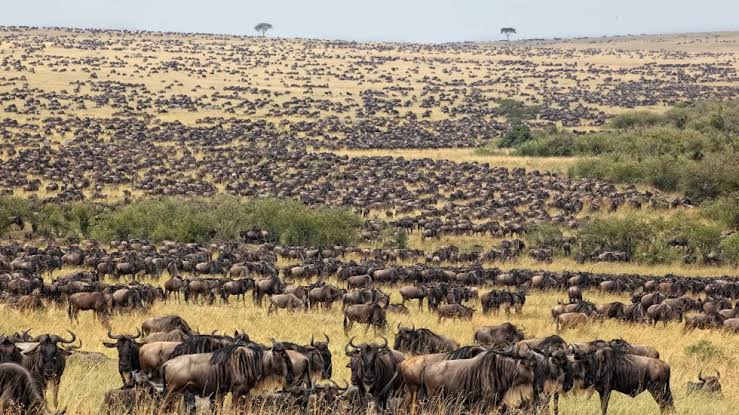
Witness the greatest birth on Earth: over 500,000 wildebeest calves born on the southern Serengeti plains.
Want to experience the Great Wildebeest Migration but don’t want to compete with crowds at the famous river crossings? Let me introduce you to the Ndutu Calving Season an extraordinary wildlife spectacle that happens every year between January and March in the southern Serengeti ecosystem, and it’s arguably the most dramatic chapter of the entire migration cycle.
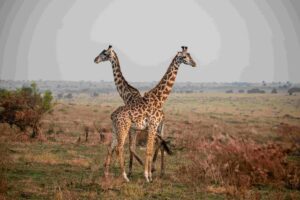
Having guided countless safaris across Tanzania’s Northern Circuit, I can tell you there is simply nothing like watching a newborn wildebeest take its first wobbly steps while predators circle the plains. The Ndutu region transforms into a vast nursery, and the predator action during these months is some of the most intense you’ll witness anywhere in Africa.
I’ve carefully crafted this 7-day Ndutu Calving Season itinerary to give you maximum time on the calving grounds while also including two of Tanzania’s other crown jewels Tarangire National Park and the Ngorongoro Crater. This isn’t just a safari; it’s front-row seats to the circle of life at its most raw and beautiful.
Key Takeaways
Ready to Witness the Greatest Birth on Earth?
Get your personalised 7-Day Ndutu Calving Season Safari quote
Get Your Free Safari Quote →Why Go on a Ndutu Calving Season Safari?
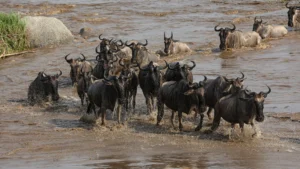
When most people picture the Great Wildebeest Migration, they imagine dramatic river crossings wildebeest hurling themselves into croc-infested waters. But the migration is a year-round circular journey, and the calving season in the Ndutu region is its most life-affirming chapter.
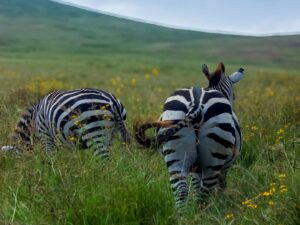
Between January and March, the nutrient-rich short-grass plains of the Ndutu Conservation Area fed by volcanic soils from the Ngorongoro Highlands attract over 1.5 million wildebeest, along with hundreds of thousands of zebras and Thomson’s gazelles. The females roughly 500,000 of them give birth within a remarkably synchronised window of just two to three weeks, with as many as 8,000 calves born per day at the peak.
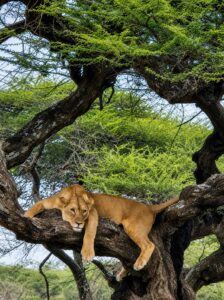
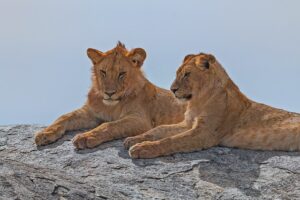
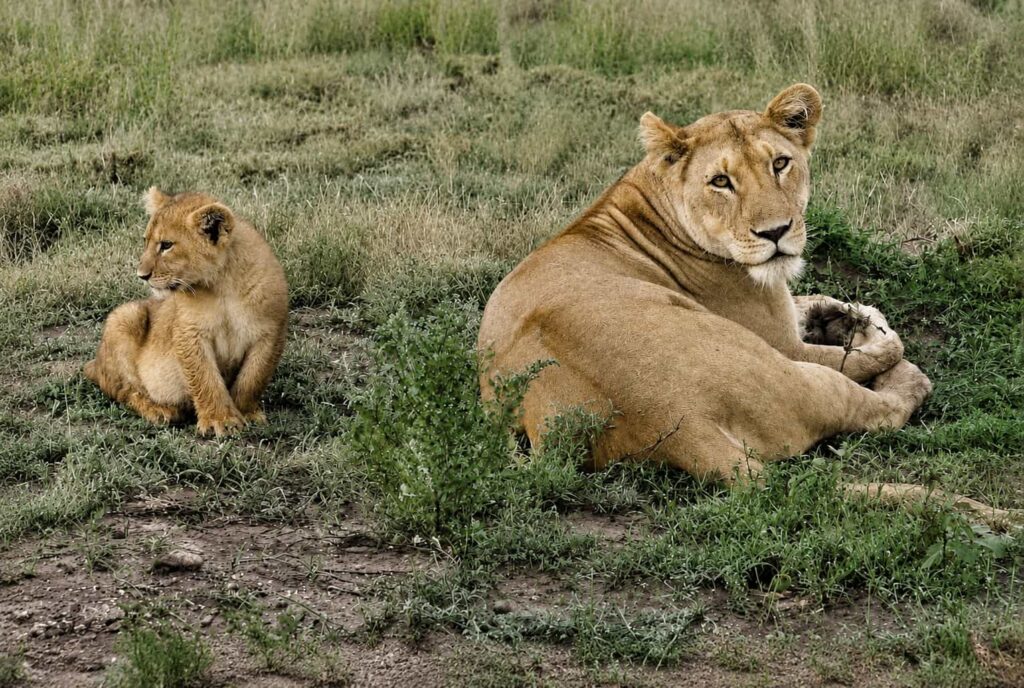
This synchronised birthing strategy is nature’s way of overwhelming predators. Lions, cheetahs, leopards, spotted hyenas, and jackals descend on the plains in huge numbers, but they simply cannot eat all the calves. It is predator versus prey on an almost unimaginable scale and you have a front-row seat.
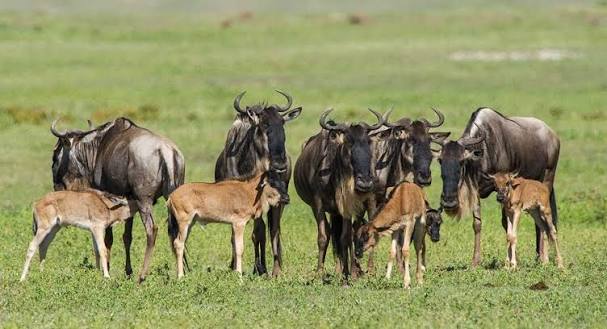
Did you know? Wildebeest calves can stand within 3 to 5 minutes of birth and can outrun a lioness within a day. This incredible adaptation is why the species thrives despite the constant threat of predation.
Why Ndutu Specifically?
The Ndutu Plains sit within the Ngorongoro Conservation Area, right at the southern edge of the Serengeti ecosystem. What makes this area uniquely suited to the calving season is the volcanic soil composition. The phosphorus-rich grasses provide nursing mothers with exactly the nutrients they need to produce milk, and the short grass means predators have less cover for ambush. It’s a landscape sculpted by evolution for this very event.
A 7-day itinerary focusing on Ndutu gives you three full days on the calving grounds — enough time to witness births, predator hunts, and the extraordinary daily drama of life and death on the plains. Combined with Tarangire’s elephant herds and the Ngorongoro Crater’s Big Five density, this itinerary delivers the complete Tanzania safari experience in one compact week.
How Do You Book a 7-Day Tanzania Safari?
The easiest and best value-for-money, way to arrange your 7-day Ndutu Calving Season safari is by booking directly with a reputable local Tanzanian tour operator. A local operator handles everything: your accommodation, park fees, game drives, transfers between parks, and the expertise of a professional safari guide who knows exactly where the herds are on any given day.
Booking through an international travel agent typically adds a 30–50% markup, as they subcontract to the same local operators you could book with directly. And self-driving in Tanzania’s national parks is not only logistically challenging but also means you miss out on the guide’s trained eye and radio network the difference between seeing a distant blob and watching a cheetah stalk a newborn calf at close range.
| Glad of Africa Safari & Tours is a locally owned Tanzanian operator with deep knowledge of the Ndutu calving grounds. We know which areas of the plains the herds favour based on recent rainfall, and our guides have spent years tracking the migration. Book directly with us and you’re paying for expertise, not an agent’s margin |
Should You Choose a Private or Group Safari?
In Tanzania, your safari vehicle is typically shared with other guests unless you specifically request and pay for a private vehicle. Here’s the good news: since all guests are staying at the same lodge or camp, you don’t waste time picking people up at the start of each game drive everyone departs together.
For most travelers, a shared vehicle works perfectly well. You get the same guide, the same access to sightings, and the same game-drive schedule. The main reason to upgrade to a private vehicle is photography. If you’re a serious wildlife photographer who wants to spend an hour at a single sighting waiting for the perfect light while others in the vehicle might be ready to move on after 10 minutes a private vehicle is worth the premium.
How Much Does a 7-Day Ndutu Safari Cost?
The 7 Days Ndutu Calving Season Safari from Glad of Africa Safari & Tours starts at US $2,700 per person. This is excellent value when you consider that Tanzania’s park fees alone are significant the Ngorongoro Conservation Area and Serengeti ecosystem carry some of the highest conservation fees in Africa.
What’s Included
- ✔ Airport pick-up and drop-off at Kilimanjaro International Airport (JRO)
- ✔ All park entrance fees (Tarangire, Ngorongoro CA, Ngorongoro Crater)
- ✔ Accommodation for 6 nights as per the itinerary
- ✔ Professional English-speaking safari guide
- ✔ All meals: breakfast, lunch, and dinner
- ✔ Bottled drinking water throughout
- ✔ Comfortable 4×4 safari vehicle with pop-up roof
- ✔ All game drives as described in the itinerary
What’s Not Included
- ✘ International flights to/from Kilimanjaro (JRO)
- ✘ Tanzania tourist visa (approximately $50–100 depending on nationality)
- ✘ Travel insurance (strongly recommended)
- ✘ Tips and gratuities for your guide and lodge staff
- ✘ Personal expenses (laundry, phone calls, drinks beyond water)
- ✘ Optional activities such as a hot air balloon safari over the Serengeti
When Is the Best Time to Visit Ndutu?
The Ndutu Calving Season runs from late January through March, with February being the absolute peak. Here’s what to expect across the season:
| Period | What to Expect |
|---|---|
| Early January | Herds begin arriving on the Ndutu Plains. Pregnant females spread across the short-grass plains. The first calves appear mid-month. |
| February (Peak) | The calving explosion up to 8,000 births per day. Maximum predator activity. This is the month for the most dramatic wildlife viewing, but lodges book out earliest. |
| March | Calving continues but at a slower pace. Herds begin preparing to move northwest. Still excellent game viewing with slightly fewer crowds than February. Occasional afternoon rain showers. |
My recommendation: If you want the full calving spectacle at its peak, aim for early-to-mid February. If you’d prefer slightly quieter parks and don’t mind seeing fewer births per day, early March still offers exceptional wildlife viewing with the added bonus that the calves are slightly older and more mobile, making for wonderful photography of them running alongside their mothers.
What Does This 7-Day Ndutu Itinerary Look Like?
This itinerary has been designed to give you two full days on the Ndutu calving grounds the heart of the safari bookended by Tarangire National Park (famous for its elephants and baobabs) and the magnificent Ngorongoro Crater. Each day’s driving has been carefully considered so you maximise time on game drives rather than in transit.
Day by Day Breakdown
Day 1 — Arrival in Arusha
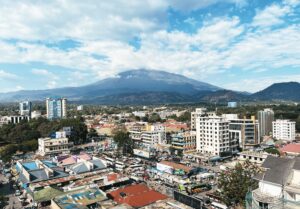
Upon landing at Kilimanjaro International Airport (JRO), you’ll be warmly welcomed by your professional safari guide from Glad of Africa Safari & Tours. After a short safari briefing covering the adventure ahead, you’ll transfer to your lodge in Arusha — Tanzania’s safari capital and the gateway to the Northern Circuit. Use this afternoon to rest after your flight and soak in the excitement of what’s to come.
Overnight: Arusha
Day 2 — Arusha to Tarangire National Park
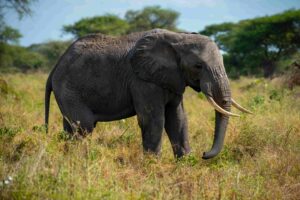
After an early breakfast, depart for Tarangire National Park home to Tanzania’s largest elephant herds and a landscape dotted with ancient baobab trees. Enjoy a full-day game drive searching for elephants, lions, giraffes, zebras, wildebeests, buffaloes, and leopards. Tarangire is also a birdwatcher’s paradise, with over 500 recorded bird species. After an exhilarating day in the bush, continue to your lodge for dinner and overnight.
Overnight: Tarangire / Karatu area
Day 3 — Tarangire to Ndutu Conservation Area
After breakfast, journey through the scenic Ngorongoro Highlands with spectacular views of the crater rim along the way — descending into the Ndutu Conservation Area in the southern Serengeti ecosystem. By afternoon, you’ll be on the plains, surrounded by hundreds of thousands of wildebeest, zebras, and gazelles. Your first Ndutu game drive begins immediately, searching for newborn calves and the predators that follow them.
Overnight: Ndutu area
Day 4 — Full-Day Ndutu Game Drive
This is the day you came for. Spend the entire day exploring the Ndutu Plains one of the greatest wildlife spectacles on Earth. Your guide will track the herds and position you for the best possible sightings. Witness thousands of calves being born, watch newborn wildebeest take their first faltering steps, and if nature delivers experience the heart-stopping drama of lions, cheetahs, or hyenas on the hunt. The photographic opportunities are extraordinary: golden light on endless plains, dramatic predator action, and the tenderness of mother-calf bonds.
Overnight: Ndutu area
Day 5 — Full-Day Ndutu Safari (Day Two on the Plains)
A second full day in the Ndutu Conservation Area dramatically increases your chances of witnessing the most dramatic predator-prey interactions. Every day on the plains is different — the herds move, the predator dynamics shift, and new calves are born hourly. Your guide uses radio networks to stay updated on the latest sightings: a lion pride on the move, a cheetah stalking through the grass, or a spotted hyena clan closing in. This extra day is what separates a good safari from a truly unforgettable one.
Overnight: Ndutu area
Day 6 — Ngorongoro Crater Game Drive
After an early breakfast, drive to the rim of the magnificent Ngorongoro Crater a UNESCO World Heritage Site and the world’s largest intact volcanic caldera. Descend 600 metres into the crater floor for a game drive unlike any other. The crater is a natural amphitheatre of wildlife: it’s one of the best places in Africa to see the critically endangered black rhino, along with dense populations of lions, elephants, buffaloes, hippos, zebras, and flamingos on the soda lake. After a picnic lunch on the crater floor, ascend and begin the drive back to Arusha for your final night.
Overnight: Arusha
Day 7 — Departure
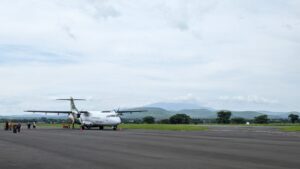
Enjoy a relaxed breakfast at your lodge in Arusha. Depending on your flight schedule, there may be time for some last-minute souvenir shopping or a visit to a local cultural centre. Your guide will transfer you to Kilimanjaro International Airport (JRO) or Arusha Airport for your departure flight. Leave Tanzania with a camera full of extraordinary images and memories of the greatest wildlife spectacle on the planet.
Ndutu Calving Season Safari FAQs
Absolutely. This is one of the best introductions to an African safari you could hope for. The wildlife density during calving season is staggering — you don’t need to search hard for animals, they are everywhere. The itinerary is lodge-based (no camping unless you want to), the transfers are comfortable, and you’re accompanied by an expert guide throughout.
u are always in a safari vehicle with an experienced guide. Predators are habituated to vehicles and do not view them as prey or a threat. As long as you follow your guide’s instructions — stay in the vehicle, keep quiet at sightings, don’t stand up suddenly — you are perfectly safe.
There are no guarantees in nature, but the calving season offers some of the highest probabilities of witnessing predator action anywhere in Africa. With 8,000 calves born per day — many of them vulnerable — lions, cheetahs, hyenas, and leopards are actively hunting throughout the day. Most guests on a 2–3 day Ndutu stay witness at least one hunt or kill, and many see several.
January through March falls within Tanzania’s “green season.” Expect daytime temperatures between 22–28°C (72–82°F), with occasional afternoon or evening rain showers. Mornings and evenings can be cool, so pack layers. The green landscape is stunning for photography, and rain showers are usually brief — they rarely disrupt game drives.
Final Thoughts — Is the Ndutu Calving Season Worth It?
After years of guiding safaris across Tanzania, I can say without hesitation that the Ndutu Calving Season is the most emotionally powerful wildlife experience this country has to offer. The river crossings in the northern Serengeti get more attention in travel media, but the calving season is, in many ways, a richer, more intimate encounter with the migration.
Where else on Earth can you watch 8,000 new lives begin in a single day and witness the raw, unfiltered drama of survival playing out across endless golden plains? Where the air is filled with the bleating of newborn calves, the distant roar of lions, and the electric tension of a cheetah locking eyes with its target?
The 7 Days Ndutu Calving Season Safari packages this spectacle into one perfectly paced week, adding Tarangire’s elephants and the Ngorongoro Crater’s Big Five density as the icing on the cake. At $2,700 per person, with an expert local guide handling every detail, it’s extraordinary value for a safari that will stay with you for the rest of your life.
Ready to Witness the Greatest Birth on Earth?
Get your personalised 7-Day Ndutu Calving Season Safari quote.
Get Your Free Safari Quote →