The Serengeti National Park is one of the world’s most remarkable wildlife destinations and a true sanctuary for Serengeti Big Cats, hosting one of the highest concentrations of predators on Earth. Located in northern Tanzania, the Serengeti stretches across vast plains of grasslands, acacia woodlands, riverine forests, and iconic rocky kopjes, creating a rich and diverse ecosystem.
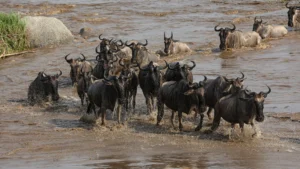
Famous for the Great Wildebeest Migration, the park witnesses millions of wildebeests, zebras, and gazelles moving across the landscape each year. This incredible abundance of prey provides perfect hunting grounds for the Serengeti Big Cats, including lions, leopards, and cheetahs, making it one of the best places in Africa to observe these powerful predators in their natural habitat.
From lion prides ruling the plains to elusive leopards resting in acacia trees and lightning-fast cheetahs chasing prey across open savannahs, the Serengeti offers unmatched wildlife experiences. Every year, thousands of safari travelers, photographers, and nature lovers visit to witness the raw beauty and drama of the Serengeti Big Cats in action.
The Big Cats of the Serengeti
The Serengeti is home to three iconic species known as the Serengeti Big Cats: the lion, the leopard, and the cheetah. Although they share the same ecosystem, each species has evolved unique adaptations that allow it to survive and thrive in different habitats and hunting situations. Lions rely on strength and cooperation, leopards depend on stealth and camouflage, while cheetahs use unmatched speed to capture prey. Together, these Serengeti Big Cats play a critical role in maintaining the balance of the ecosystem by regulating herbivore populations and ensuring the health and sustainability of prey species.
Habitat of Serengeti Big Cats
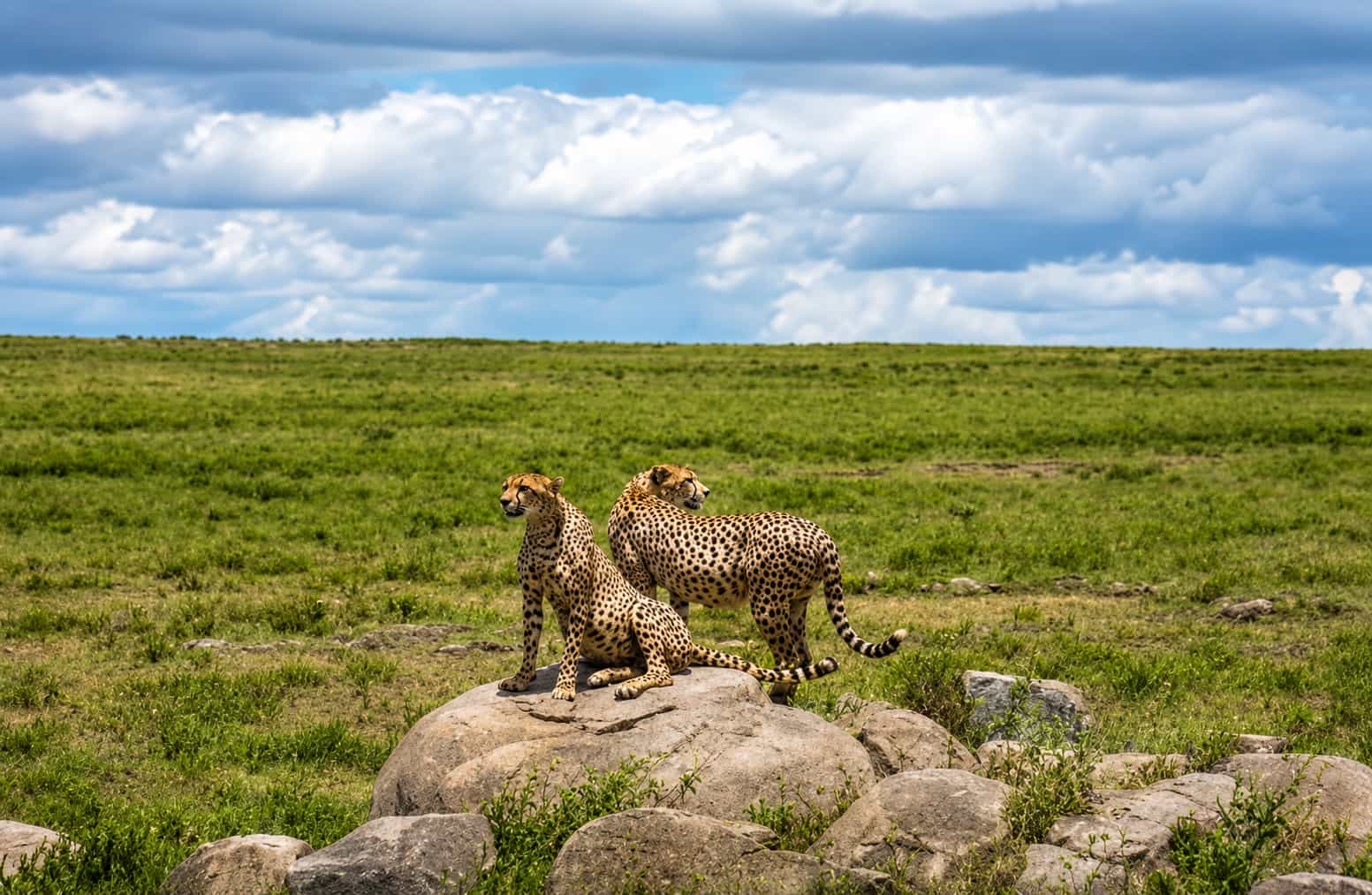
The Serengeti offers a variety of habitats that support the diverse lives of the Serengeti Big Cats throughout the year. The endless grass plains of the southern and central Serengeti provide ideal hunting grounds for cheetahs, whose success depends on open visibility and space for high-speed chases. Lions, among the most dominant Serengeti Big Cats, are commonly found across the grasslands and around rocky kopjes where they rest, monitor their territory, and ambush prey. Leopards, another key member of the Serengeti Big Cats, prefer areas with dense vegetation, riverine forests, and acacia woodlands where they can remain hidden while stalking prey.
The diversity of habitats allows these Serengeti Big Cats to occupy different ecological niches, reducing direct competition while ensuring a balanced and thriving ecosystem.
Lions: The Kings of the Serengeti
Lions are the most recognizable predators of the Serengeti and are often referred to as the kings of the African savannah. The Serengeti supports one of the largest lion populations in Africa due to its abundance of prey and extensive protected habitat. As part of the iconic Serengeti Big Cats, lions play a central role in maintaining the balance of this vast ecosystem. They are powerful carnivores with muscular bodies designed for strength rather than speed. Male lions are distinguished by their magnificent manes, which serve as a symbol of dominance and help protect them during territorial battles.
The hunting strategy of lions is unique because they are the only truly social cats among the Serengeti Big Cats. Lionesses usually conduct most of the hunting and work together as a team to increase their chances of success. They often stalk prey under the cover of darkness or approach from multiple directions before launching a coordinated attack. Their primary prey includes wildebeests, zebras, buffaloes, and various antelope species. By working together, lions can successfully hunt animals much larger than themselves.
From an ecological perspective, lions function as apex predators at the top of the food chain within the Serengeti Big Cats ecosystem.
Their presence influences the behavior and movement of herbivore populations throughout the Serengeti. By removing weak, injured, and diseased animals from prey herds, lions contribute to maintaining healthy wildlife populations and supporting ecological balance. Their kills also provide food for scavengers such as hyenas, jackals, and vultures, creating important links within the ecosystem.
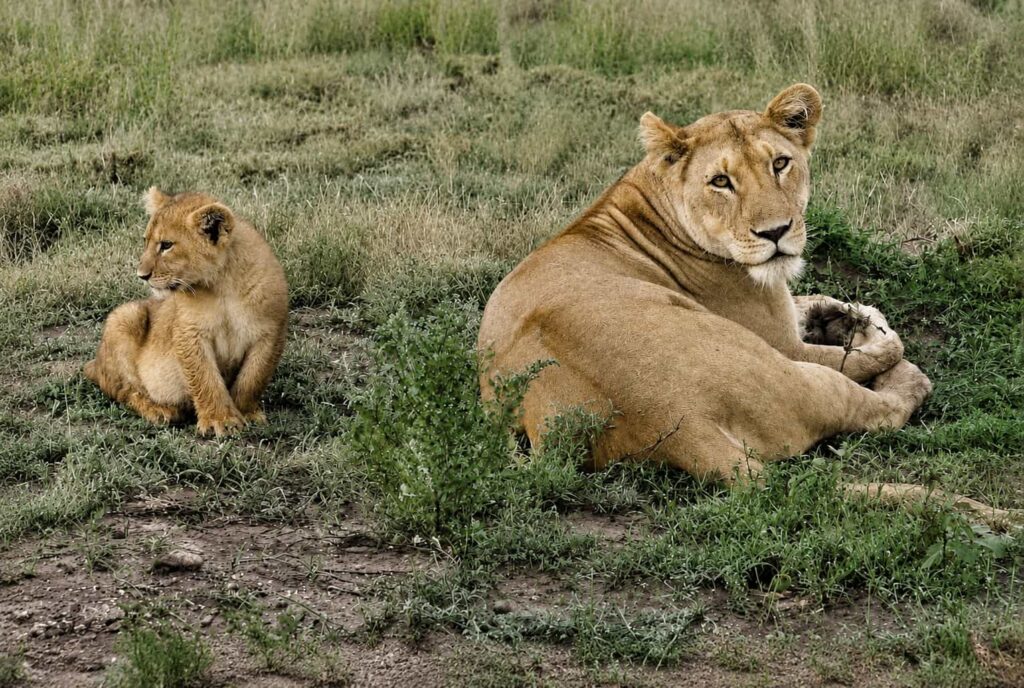
Lions live in social groups known as prides, which are a defining characteristic of the Serengeti Big Cats. These prides consist of related females, their cubs, and one or more adult males. Female lions typically remain in the pride where they were born, creating strong family bonds that may last a lifetime. Males usually leave their birth pride when they reach maturity and may form coalitions with brothers or other males to compete for territory and breeding opportunities.
Parental care among lions is highly developed compared to other cat species within the Serengeti Big Cats group. Lionesses often synchronize births and raise cubs together within the pride. Mothers nurse, protect, and teach their young the skills needed for survival. Cubs remain dependent on adults for nearly two years before becoming independent hunters.
The lion mating system is polygynous, meaning dominant males mate with multiple females within a pride. Male lions must constantly defend their position against rivals seeking to take over the pride. Successful males may father numerous cubs during their tenure as pride leaders.
Lions are opportunistic feeders capable of consuming large quantities of meat after a successful hunt. Adult lions may eat more than thirty kilograms of meat in a single feeding session. Although they are skilled hunters, lions also scavenge carcasses when opportunities arise, demonstrating their adaptability as predators within the Serengeti Big Cats ecosystem.
Leopards: Masters of Stealth and Camouflage
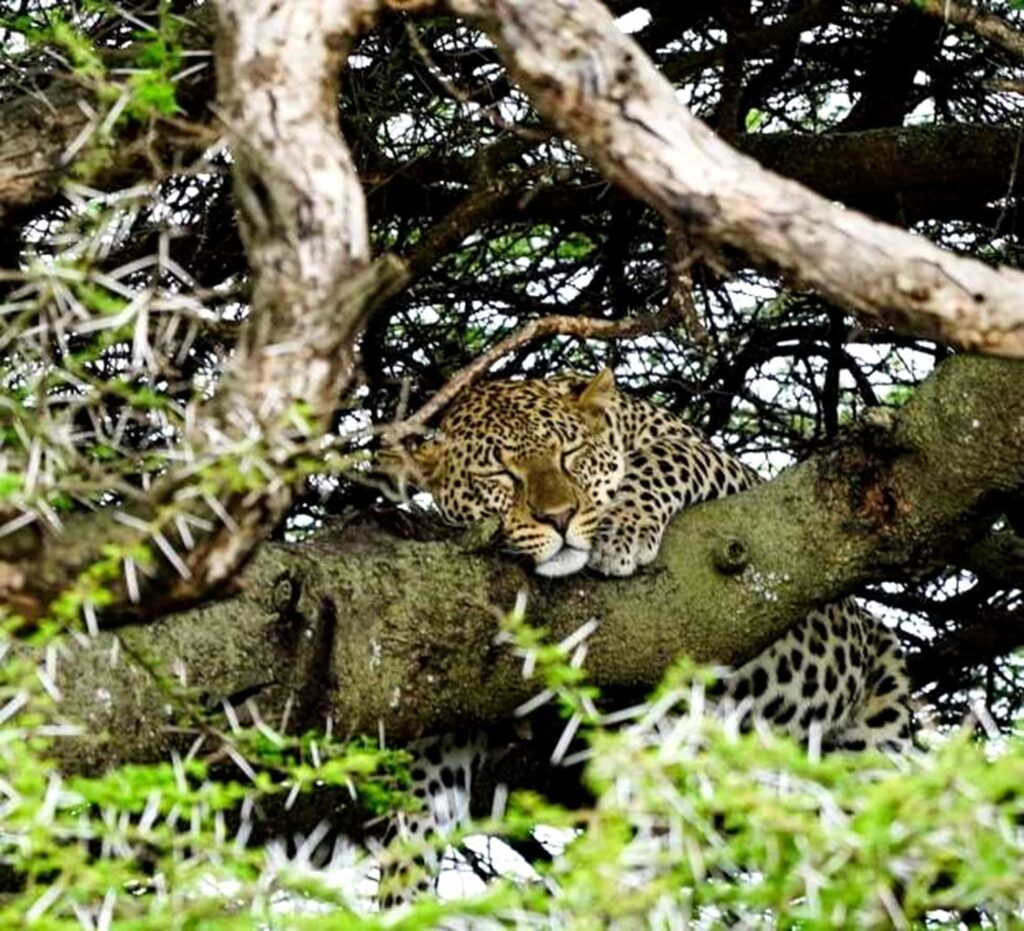
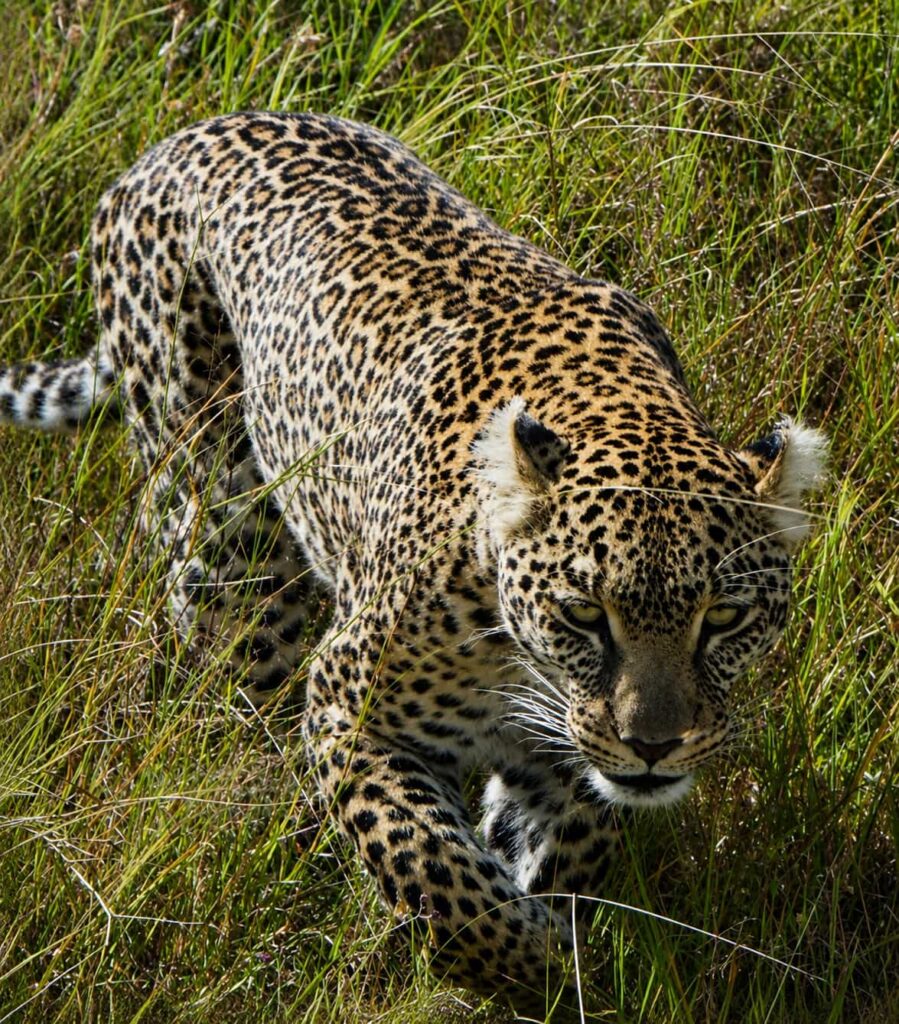
Leopards are among the most elusive and adaptable predators in the Serengeti Big Cats ecosystem. Unlike lions, they live solitary lives and are rarely seen despite being widespread throughout the region. Their beautiful golden coats covered in dark rosettes provide excellent camouflage, allowing them to blend seamlessly into woodland and forest habitats.
Leopards rely on stealth and patience rather than strength or speed. They spend considerable time stalking prey before launching a sudden ambush from close range. Their diet is incredibly diverse and includes antelopes, monkeys, birds, rodents, and even reptiles. This flexibility allows leopards to survive in a wide range of environments across the Serengeti Big Cats landscape.
Ecologically, leopards help regulate populations of medium-sized mammals and contribute significantly to maintaining biodiversity within the Serengeti Big Cats system. Their ability to exploit various food sources makes them one of Africa’s most successful predators. Unlike lions, leopards are mainly active during the night, reducing competition with larger carnivores.
The social organization of leopards is based on solitary living. Each adult maintains a territory that overlaps with members of the opposite sex but is defended against rivals of the same sex. Communication occurs through scent marking, vocalizations, and scratches left on trees.
Female leopards provide all parental care. Cubs are hidden in dense vegetation during their early weeks of life and are frequently moved to avoid detection by predators. Mothers spend many months teaching their young essential hunting and survival skills before they become independent.
Leopards follow a polygynous mating system in which males seek access to multiple females within overlapping territories. Cubs are raised solely by their mothers and receive no assistance from males.
One of the leopard’s most fascinating feeding behaviors is its habit of carrying prey into trees. This remarkable adaptation protects kills from lions, hyenas, and other scavengers. Leopards often return to the same carcass for several days until it is fully consumed.
Cheetahs: The Fastest Hunters on Earth
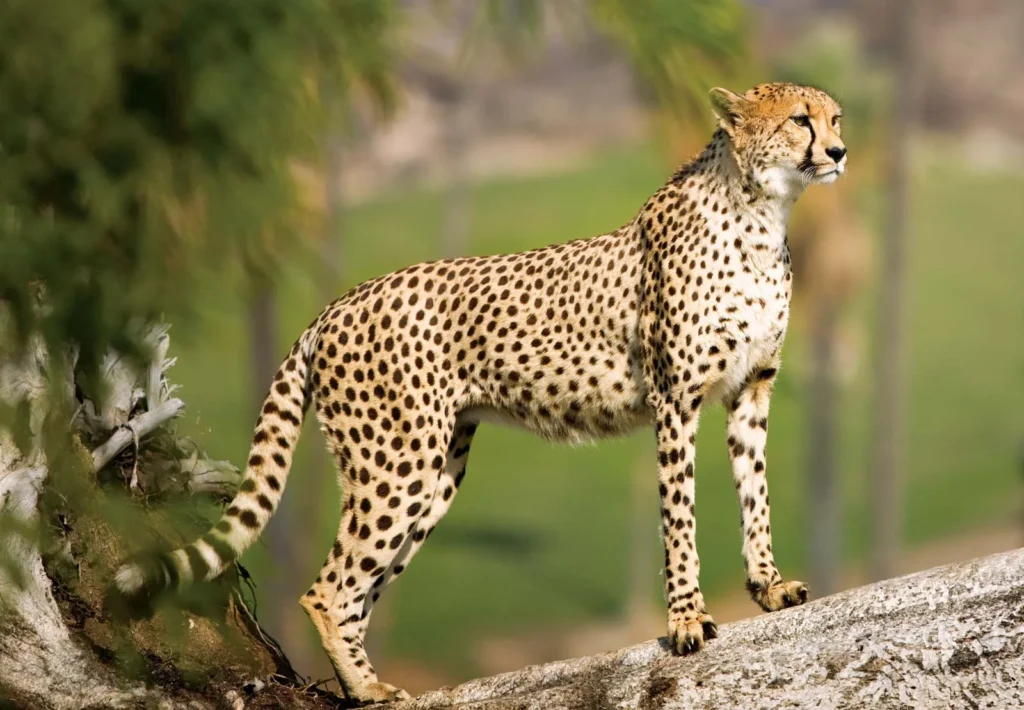
Cheetahs represent one of nature’s most extraordinary evolutionary achievements. Designed specifically for speed, they possess slender bodies, long legs, enlarged lungs, and flexible spines that allow them to reach speeds of more than 100 kilometers per hour. These adaptations make them the fastest land animals on Earth.
Unlike lions and leopards, cheetahs hunt primarily during daylight hours. They rely on keen eyesight to locate prey from a distance before stalking to within striking range. Once close enough, they unleash a powerful sprint capable of accelerating faster than most sports cars. Their preferred prey includes Thomson’s gazelles, Grant’s gazelles, impalas, and young wildebeests.
The ecological role of cheetahs differs from that of lions and leopards. They specialize in hunting medium-sized antelope in open habitats and help regulate populations of these species. Because they are less powerful than other large predators, cheetahs avoid direct confrontations whenever possible.
Cheetahs have a unique social structure among cats. Females live alone except when raising cubs, while males often form small coalitions, usually consisting of brothers. These coalitions improve hunting success and increase the ability to defend territories.
Parental care is provided entirely by the female. Cheetah cubs face numerous threats from lions, hyenas, and other predators, resulting in high mortality rates. Mothers invest enormous effort in protecting and teaching their offspring, moving them frequently to avoid detection.
The mating system of cheetahs is also polygynous. Females travel over large home ranges and select mates during breeding periods, while males establish territories that attract potential partners.
Feeding behavior among cheetahs reflects their vulnerability to larger predators. After a successful hunt, they consume prey quickly because lions and hyenas frequently steal their kills. This pressure forces cheetahs to hunt more often than other big cats and influences many aspects of their behavior.
Tree-Climbing Cats of the Serengeti
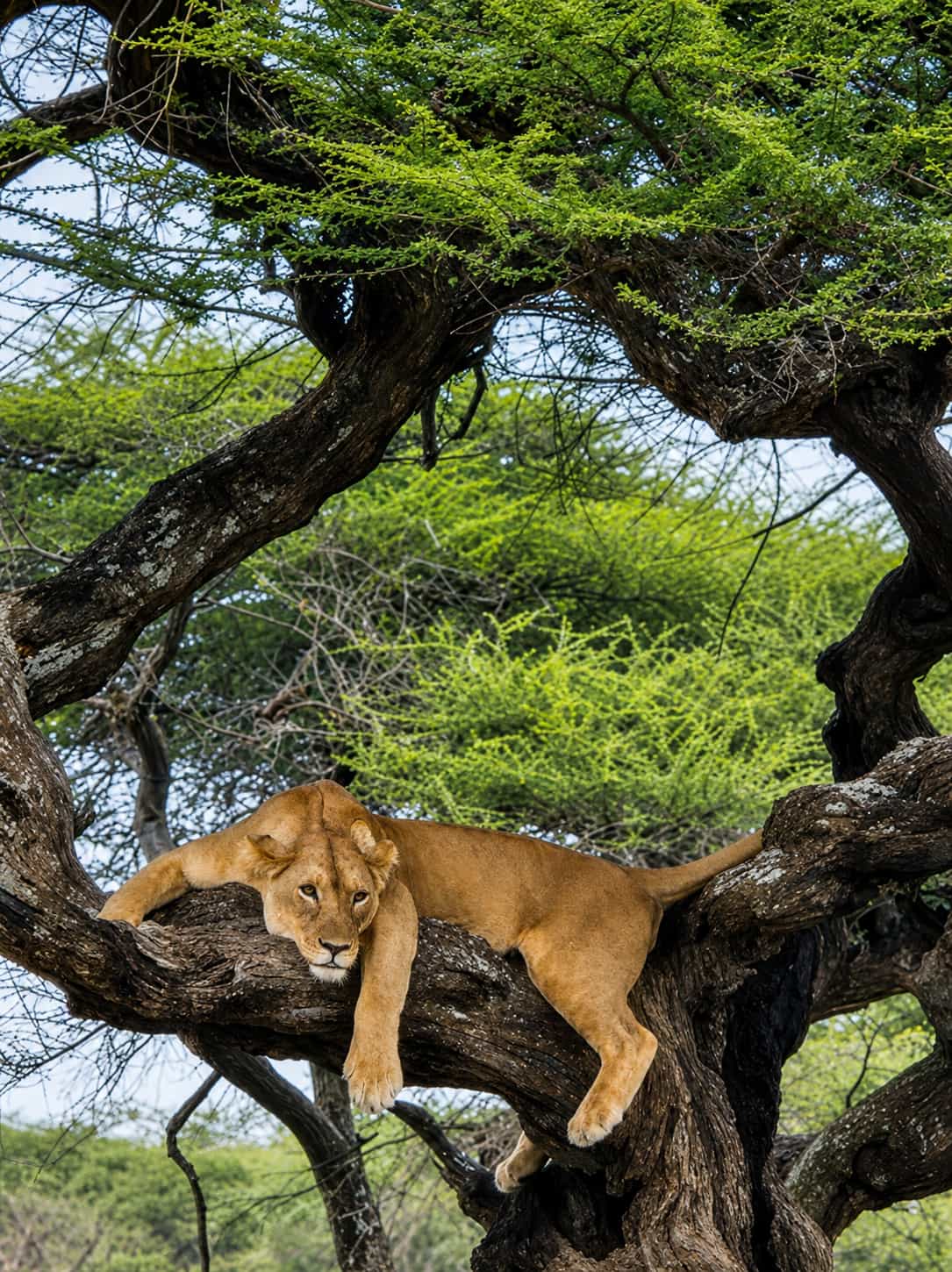
One of the most fascinating behaviors observed among Serengeti big cats is their ability to climb trees. While leopards are undoubtedly the most accomplished tree climbers in the ecosystem, lions can also occasionally be seen resting on branches, particularly in certain areas of northern Tanzania. Tree climbing provides several important advantages, including protection from competitors, a better vantage point for observing prey and potential threats, and a cool resting place during the heat of the day.
Leopards are considered the true masters of tree climbing. Their powerful shoulder muscles, strong claws, exceptional balance, and remarkable agility allow them to ascend trees with ease, often carrying prey that weighs as much as or even more than their own body weight. After a successful hunt, a leopard will frequently drag its kill into a tree to protect it from scavengers and larger predators such as lions and spotted hyenas. This behavior significantly increases the chances of retaining a meal for several days, allowing the leopard to feed at its own pace. Visitors on safari often spot leopards resting on large acacia branches, where their beautifully patterned coats blend perfectly with the surrounding foliage.
Although lions are generally ground-dwelling predators, some populations have developed the habit of climbing trees. In Tanzania, tree-climbing lions are occasionally observed in the Serengeti and more commonly in areas such as Lake Manyara National Park. Researchers believe that lions climb trees to escape biting insects, avoid the heat radiating from the ground, enjoy cooling breezes, and gain a better view of their surroundings. Young lions are particularly agile climbers, and entire prides can sometimes be seen lounging on large branches during the hottest hours of the day.
Cheetahs, unlike leopards and lions, are not specialized tree climbers. Their body structure is adapted primarily for speed rather than climbing. However, cheetahs often use termite mounds, fallen logs, and low branches as observation platforms from which they scan the plains for prey. Their excellent eyesight allows them to detect movement from long distances, making elevated viewpoints valuable during hunting activities.
The tree-climbing behavior of Serengeti big cats demonstrates the incredible adaptability of these predators. Whether it is a leopard safeguarding its meal high above the ground or a lion resting comfortably on a branch overlooking the savannah, these behaviors provide some of the most memorable wildlife sightings for visitors exploring the Serengeti ecosystem.