When is the calving season in Tanzania?+
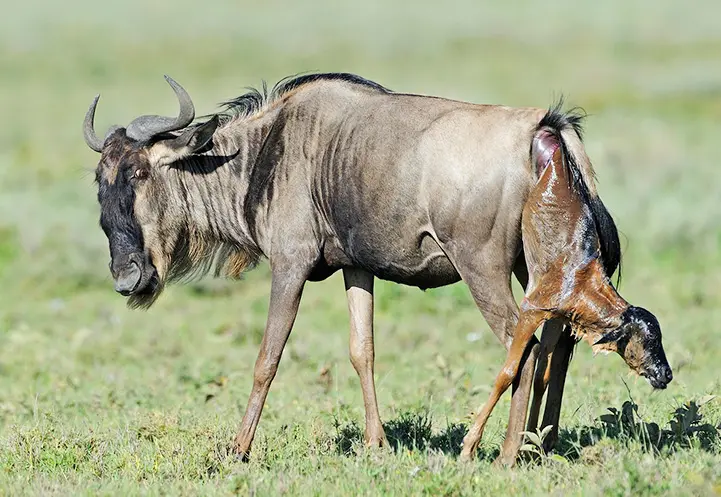
The peak is usually February, with births starting in late January and continuing into March. Exact timing follows the rains, so it changes a little each year.
Where is the best place to see the wildebeest calving?+
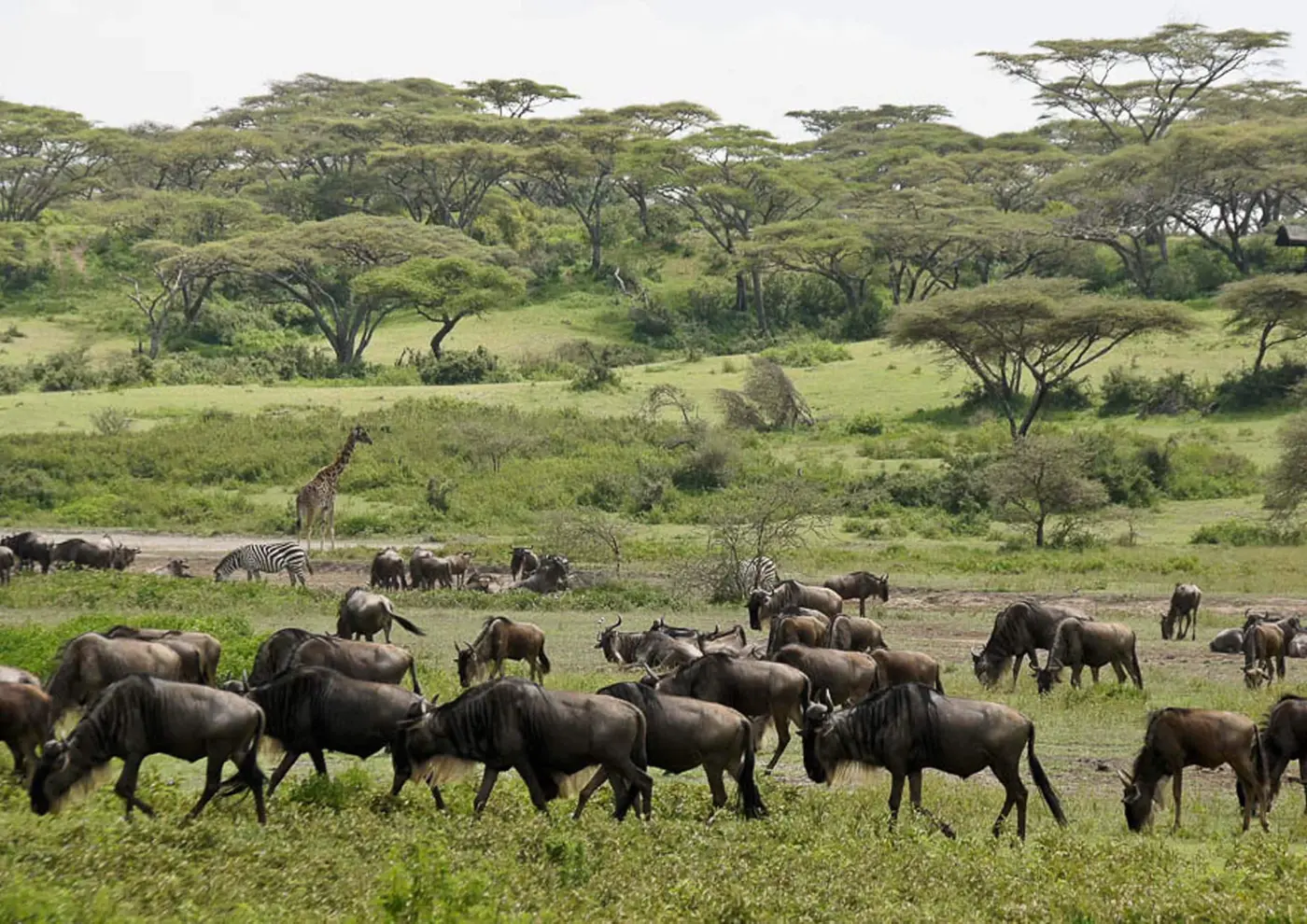
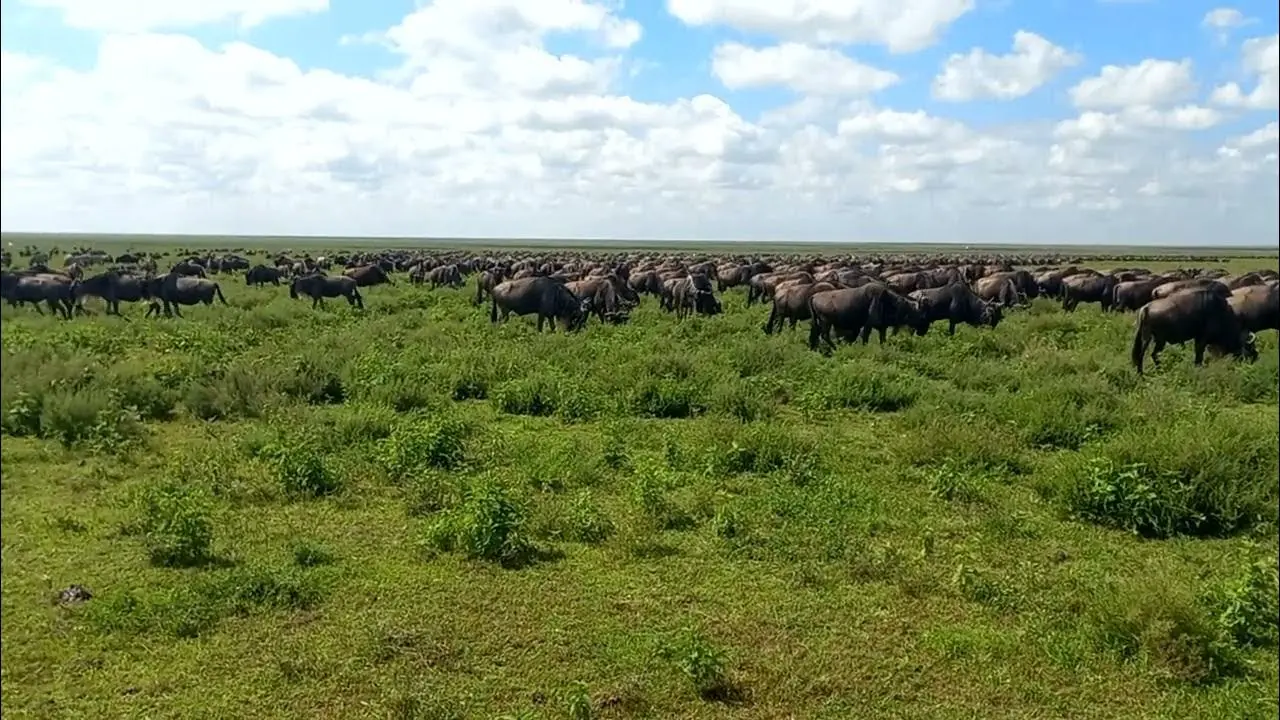
The Ndutu area in the southern Serengeti and the Ngorongoro Conservation Area, together with the nearby Kusini plains. The short-grass plains here hold the herds during the birthing weeks.
How many days do I need for a calving season safari?+
We recommend at least five days, with two or three nights around Ndutu. Six to seven days gives you time to follow the herds and add Tarangire, Lake Manyara or the Ngorongoro Crater.
Is Ndutu crowded in February?+
February is the busiest month, but the plains are large and a good guide finds quiet spots. For fewer vehicles, travel in late January or early March.
What will I see during the calving season?+
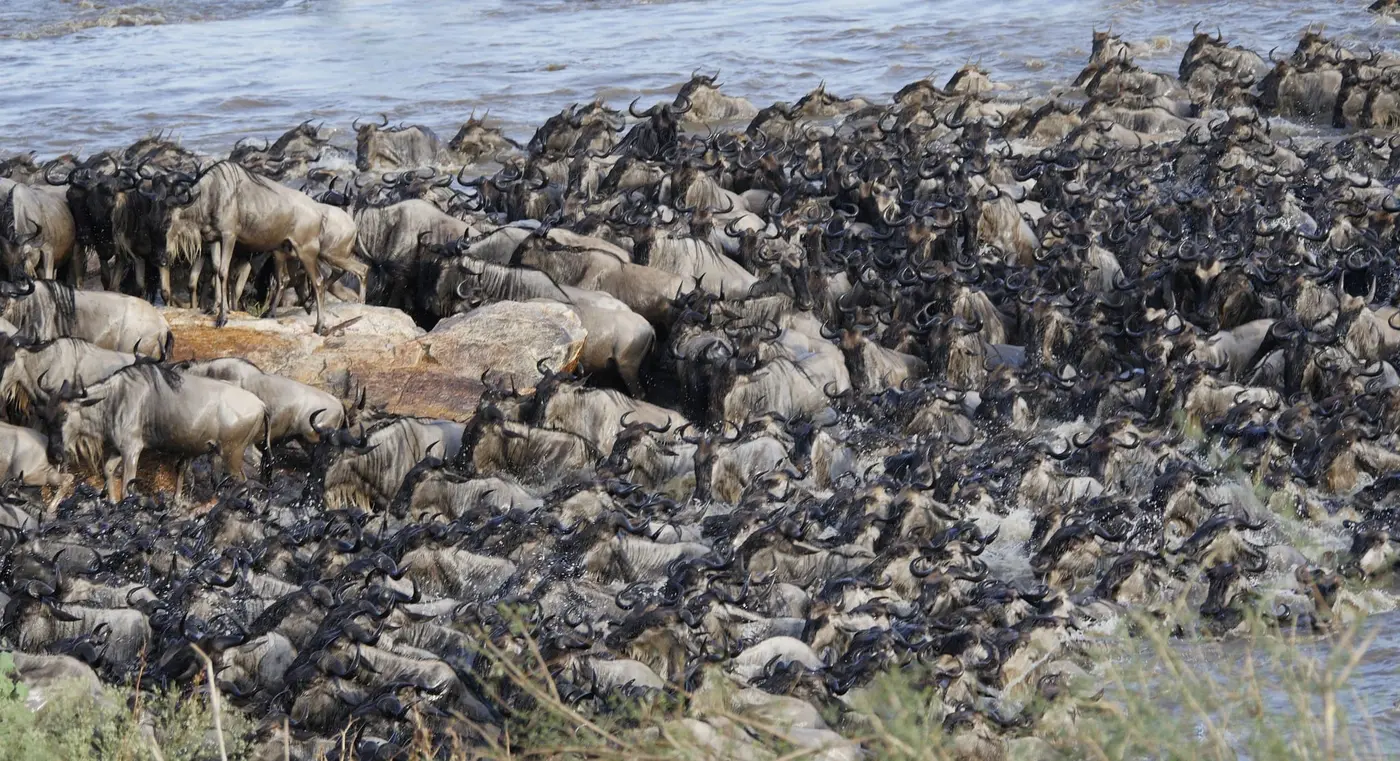
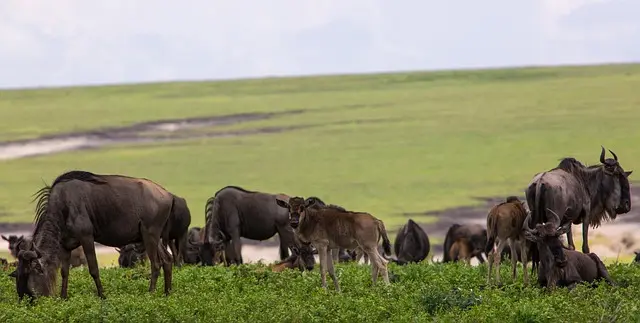
Thousands of newborn wildebeest and zebra foals, and the predators that follow them: lions, cheetahs, spotted hyenas, jackals and leopards. Hunts are part of the experience, so it is not always gentle.
How much does a Ndutu calving safari cost?+
Our calving season packages start from about $2,600 per person for five days. The price depends on the number of days, the accommodation and the size of your group. Ask us for a quote for your dates.
What should I pack for Ndutu in the calving season?+
Layers: it is cool in the mornings and warm in the day. Bring a light rain jacket, a hat, sunscreen, binoculars and a camera with a zoom lens. Ndutu is in the green season, so expect a few short showers.
Can I combine the calving season with the Ngorongoro Crater?+
Yes. Many itineraries spend two or three nights at Ndutu and one night on the crater rim, with a descent into the crater the next morning. See our 5-day Ndutu calving season and Ngorongoro Crater safari.

 Saison des naissances 2027
7 jours
À partir de 2,800 USD / personne